









From your inbox to your lobby camera, we put AI to work inside what you already run, launch it in 30 days, and operate it from there.
Your businessiswas limited towhat your people can do, and see.
Revenue you never saw
Every deal you slow-walk, every client a competitor can start on Monday. None of it shows up in a report.
Your best people, doing the worst work
Hired for judgment, paid for data entry between systems that don't talk. When they leave, the process leaves too.
The competitor at half the headcount
Someone your size quotes the same job with fewer people. You find out when you lose the bid.
The incident nobody was watching
Your cameras record everything, but nobody watches at 3 a.m. You find out the next morning, on replay.
We put AI to work in the real world.
Your cameras already see everything. Kaivo Vision notices what matters while it's happening and gets it to the right person, usually on the cameras you already have.
See Kaivo Vision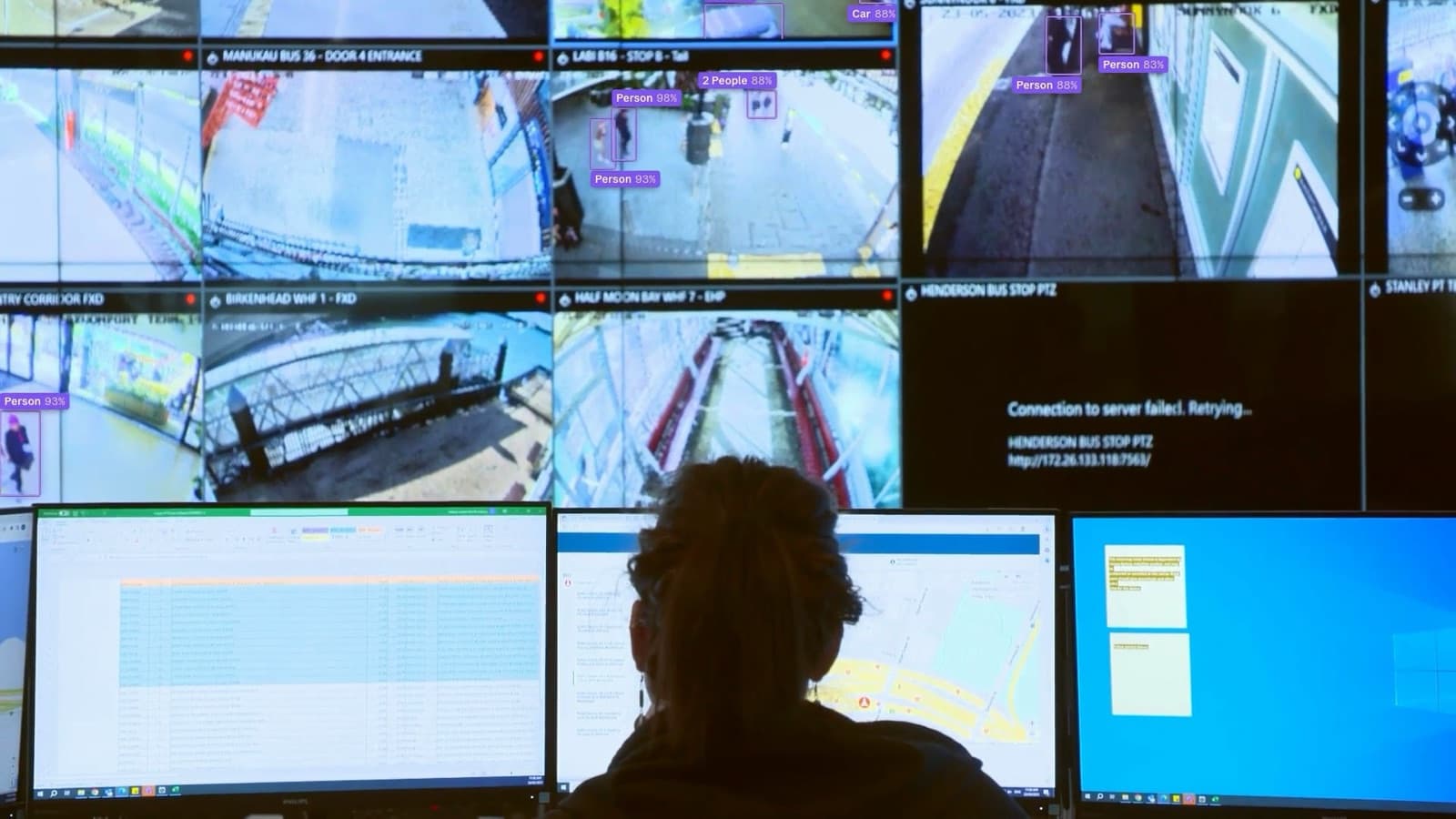 LIVE
What we buildWork that runs itself.
Every team has work that eats the day. Here's what it looks like once it runs on its own. Each example is a workflow we've delivered.
Learn more about Kaivo Systems
Front desk and insurance checks
Calls get answered when every line is busy. The agent books a real slot from the calendar, reads the insurance card the patient texts over, and confirms coverage with the insurer before the front desk gets to it.
A patient calls the clinic while both lines are busy and four callers are on hold, and the agent answers. She needs a check-up this week and has changed insurance. The agent offers Thursday at 10:40 and asks her to text a photo of her new card. It reads the card, confirms her coverage and a $25 copay with the insurer, and closes the old policy on file. Her record is updated, an intake form and a reminder go out, and she gets a text confirming the booking. Nobody at the front desk touched it.

The morning brief
Before 7am, agents work the inbox, the calendar and the lease files at the same time. By the time anyone opens their phone, what's left is one page and the one decision that needs a person.
At 6:58 the phone shows 57 unread emails, a site walk that clashes with a lender call, and a lease renewal due Friday. Three agents take them at once: tenant replies are drafted and the rest filed, the site walk moves to 11:30 with invites sent, and the renewal is drafted on the same terms. A one-page brief at 7:00 lists what was handled, three comparable sales nearby, and the one thing that needs a decision: the Hale Street refinance terms, approved with one tap.

Every channel's numbers, in one place
Six channels reported six different audiences for the same episode. The workflow pulls every export, matches the show across the IDs each platform gives it, and counts each viewer once, so the whole team goes into the sponsor call with one number.
An email thread asks how many people watched episode 214 of Night Market. The video platform says 1.2 million, the app says 380,000, the ad team has another number, and a sponsor call is at 2pm. The workflow takes the exports from six channels and matches the episode across the four IDs they use for it. One dashboard shows 2.1 million unique viewers from 2.9 million views, with watch hours, ad revenue, new subscribers and views by channel. Every channel is counted once, in time for the 2pm call.

Outbound that talks back
Every store on the list is contacted for a reason, in a message written for it. When a buyer replies, the agent answers with real prices and books the rep's visit, and what got replies this week shapes next week's batch.
On Monday at 8:10 a list of 1,240 independent stores is enriched, each with a reason to reach out: Maria Lopez of Lopez Family Market has just opened a second location. At 8:14 she gets an email written for her new store, and other buyers get messages about their own stores. At 9:12 she clicks through into a chat, asks about Mexican sodas in glass, and gets prices and delivery days at once. She asks for a rep, and a visit is booked for Thursday at 10 with a starter order drafted. Her account record shows the signal, the first touch, the chat and the booked visit. What the week taught, that new-location openers get three times the replies and owners reply by text, is applied to the next batch of 860 stores.
Four weeks from callto real work, running.
No discovery phase you have to buy. No proof of concept. The first workflow goes live, then we run it.




It works with the software and cameras you already have.
Nothing gets replaced.

The supplier portal.
The tool nobody is going to replace.

Security is set by you, not by us.
Where the data sits
Decided against your requirements before we build.
Which credentials
The workflow runs on the credentials you choose.
What it can touch
And what it can't. Access is scoped to what you approve.
Written into the contract
There's no standard posture you have to accept to work with us.
In their words.
“Since working with Kaivo, the day-to-day operations of my practice run noticeably smoother. Their automations handle a lot of what used to eat up my time, and it's saved me both hours and money.”

“We engaged Kaivo to help streamline our operations and identify practical ways to implement AI across the business. They’ve helped us automate a number of our day-to-day processes and build tools to make information easier to access and use. Their work has helped us improve efficiency, get information faster and begin integrating AI into how we operate the business.”

“Most AI firms show up with a product and try to make your problem fit it. Kaivo AI did the opposite. They understood how we make decisions, built exactly the infrastructure that decision process needed, and nothing more. That discipline is rare.”

“Working with Kaivo was genuinely a pleasure. They took the time to understand how our team works, then moved quickly and delivered exactly what we needed, without wasting a minute of ours.”

“Kaivo worked with us in our early days, when most of our operations ran on a few people's spare hours. They streamlined the processes that were slowing us down, and a small team got its time back for building the product.”

Start with one workflow.
Thirty minutes, and you'll know which workflow to start with, what it does and what it costs per month.